


This year marks a historic milestone: The Louisiana Weekly is celebrating 100 years of continuous publication, advocacy, and fearless journalism in service of the Black community and beyond. Since 1925, we have been a trusted voice for justice, culture, and progress in New Orleans and across the nation.
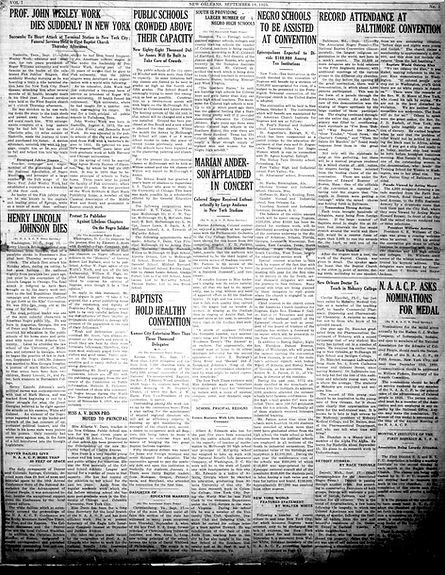


The first front page of The Louisiana Weekly, published on October 10, 1925.

The first issue of The Louisiana Weekly, published on September 19, 1925 as The New Orleans Herald.
The Story of

The Louisiana Weekly was founded in 1925 in New Orleans by Constant C. Dejoie, a businessman, and Orlando C.W. Taylor, a journalist and educator. Their vision was to create a newspaper that gave voice to the African American community at a time when mainstream papers ignored those perspectives. Within weeks of its first issue, the paper adopted the name it still carries today, signaling its broader mission to reach readers across Louisiana.
From the beginning, the Weekly became more than a newspaper. It chronicled local politics, church life, education, and culture, while also documenting the everyday realities of segregation and inequality. Over the decades it reported on milestones such as the integration of New Orleans schools, the devastation of Hurricane Katrina, and more recent calls for racial justice, always from the perspective of the communities most affected.

La Weekly 25th Anniversary Edition - September 16, 1950
The Weekly has remained in continuous publication for nearly a century, weathering changes in ownership, shifts in media, and the challenges of sustaining independent Black journalism. For decades it was guided by members of the Dejoie family, ensuring continuity of mission and voice. Today it continues to publish from New Orleans, carrying forward its role as both a chronicle of history and a trusted voice for the future.

100th Anniversary Edition
September 15–21, 2025

100 Years in Print
Headlines Through History
A century of news that shaped New Orleans and beyond
June 13, 1931
Fighting Injustice in the Scottsboro Case
The Weekly reported on nine Black youths falsely accused in Alabama, a case that became a national symbol of racial injustice.

Dec 13, 1941
New Orleanians Sent to War After Pearl Harbor
Days after Pearl Harbor, the paper highlighted Black soldiers from New Orleans entering combat while still serving in a segregated military.

May 22, 1954
Supreme Court Ends School Segregation
Coverage of Brown v. Board hailed the decision as a second emancipation, ending legal segregation in public schools.

Nov 19, 1960
Ruby Bridges Walks Into History
The Weekly covered New Orleans’ first school desegregation, with Ruby Bridges entering under heavy police guard.

Aug 21, 1965
Thousands Jam Vote Registration Office
Just weeks after the Voting Rights Act, the Weekly showed how Black New Orleanians turned out in record numbers to register, marking a major shift in local political power.

Nov 12, 1977
A City Elects Its First Black Mayor
Ernest “Dutch” Morial’s victory as the first Black mayor of New Orleans marked a milestone in local politics.

Nov 22, 1980
Tragedy in Algiers
The paper reported on the killing of seven Black residents, widely seen as police retaliation, exposing deep mistrust.

Oct 26, 1991
Blocking David Duke’s Rise
High Black voter turnout in New Orleans played a decisive role in stopping the former Klan leader’s run for governor.

Sept 26, 2005
Katrina Exposes Government Failures
The Weekly revealed how thousands of mostly Black residents were left stranded, exposing failures at every level of government.

June 2020
Marching for Racial Justice
Coverage of George Floyd protests captured New Orleans’ largest marches in decades, demanding systemic change.


African American Human Interest Journalism
in
Beyond its groundbreaking civil rights coverage, The Louisiana Weekly consistently chronicled the everyday lives, culture, and achievements of Black New Orleanians, stories that mainstream media largely ignored. Its human-interest reporting captured the richness of community life, offering readers not only accounts of struggle but also stories of joy, pride, and progress. The paper highlighted Black-owned businesses, churches, and civic organizations that anchored neighborhoods, celebrated musicians and performers who shaped American culture, and documented family milestones, cultural festivals, and artistic expression. For example, in 1935 the Weekly ran features on the growth of Black-owned insurance companies in New Orleans; in 1941 it celebrated the debut of Marian Anderson’s concert at Dillard University; in 1978 it covered the excitement of the Zulu parade and Black Mardi Gras traditions; and in the years after Hurricane Katrina in 2005, it told stories of families rebuilding and neighborhood traditions returning. Through this coverage, The Louisiana Weekly not only reported history but also preserved the fabric of daily Black life, offering readers a mirror of their resilience, creativity, and collective strength.


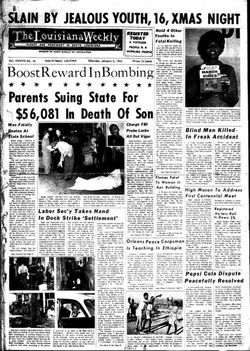
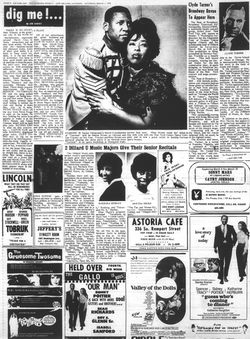
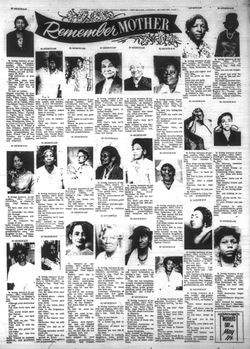
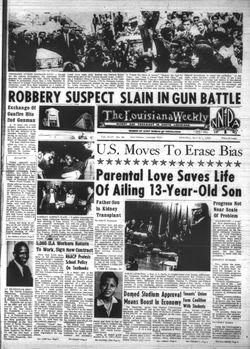
Pick a Page, Find a Story!
Random Pages from

 |  |  |  |  |  |
|---|---|---|---|---|---|
 |  |  |  |  |  |
 |  |  |  |  |  |
 |  |  |  |  |  |
 |  |  |  |  |  |
 |  |  |  |  |  |
 |  |  |  |  |  |
 |  |  |  |  |  |
 |

Special Thanks To: Jacques Morial: archival research | Amit Hai Cohen: Web and digital exhibit | Ashton Broden and Alaina Robinson: videography | The Dejoie-Hall family: archives and family records | The Louisiana Weekly Centennial Committee | The students of the Department of Mass Communication at Xavier University of Louisiana
Black Press Legacy Project Leads: Dr. Shearon Roberts and Dr. Nia Mason